Curriculum coherence
Trace content and learning targets through grade-team plans and department alignment. Identify the next planning conversation.
 BOOMERANGPROGRESSEvidence. Response. A useful return.A Boomerang Classroom product
Create a consistent model for progress monitoring across teachers and teams while preserving each subject’s expectations and each learner’s individual goals.
Review protected summaries, identify the next team conversation, and follow authorized evidence back to the classroom.
Coordinate scope and sequence across grades 7–12. Publish clear learning targets and proficiency descriptors, connect classroom evidence to those targets, and establish a predictable review routine.
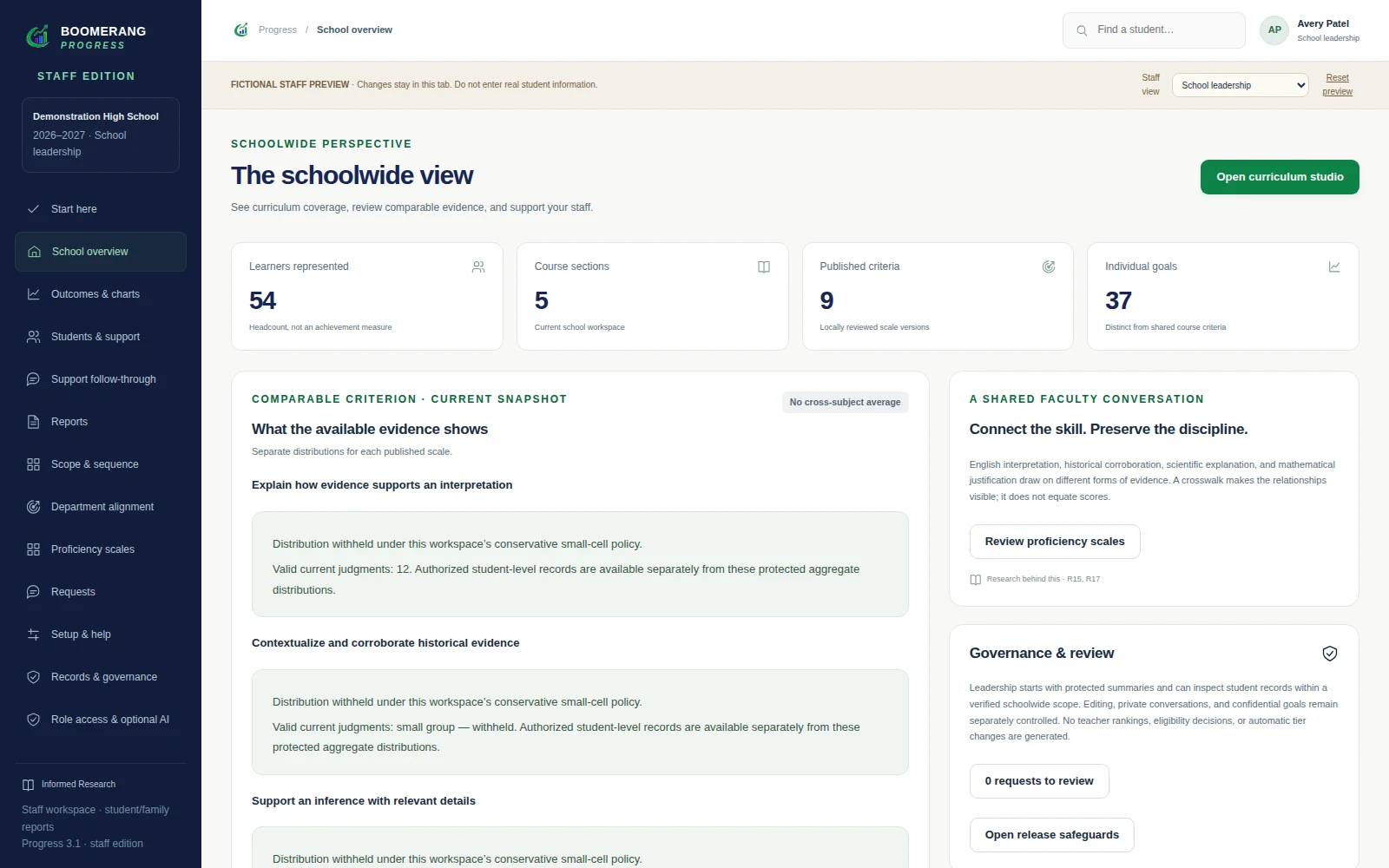
Protected aggregates help leaders inspect patterns. With a verified schoolwide grant, follow a pattern into authorized class and individual records and inspect whether support made its way back to the classroom. Different measures and subjects remain separate; confidential goals, score editing, and private conversations retain their own boundaries.

Trace content and learning targets through grade-team plans and department alignment. Identify the next planning conversation.
Review issued classroom actions, teacher acknowledgement, delivery conditions, and new evidence. Small-cell suppression still protects sensitive aggregate distributions; a broad view is not blanket editing authority.
Establish staff assignments, a collection and review schedule, approved measures, privacy procedures, and a reporting process before school use.
The model draws on national research and federal guidance. Schools bring their own adopted standards, curriculum, and instructional context. A curated starter catalog supports framework browsing; additional state, district, and pathway selections can be added through reviewed imports.
Local curriculum, standards adoption, contracts, and student-record responsibilities remain part of each school’s implementation.