Case managers
Follow assigned students’ individualized goals, observations, decisions, and supplemental progress contributions. Prepare information for the school’s IEP reporting process.
 BOOMERANGPROGRESSEvidence. Response. A useful return.A Boomerang Classroom product
Bring the student’s goals, comparable evidence, support already delivered, and dated decisions into the same conversation.
Follow an individual goal, comparable observations, support conditions, and the next review. Return the useful next step to the classroom.
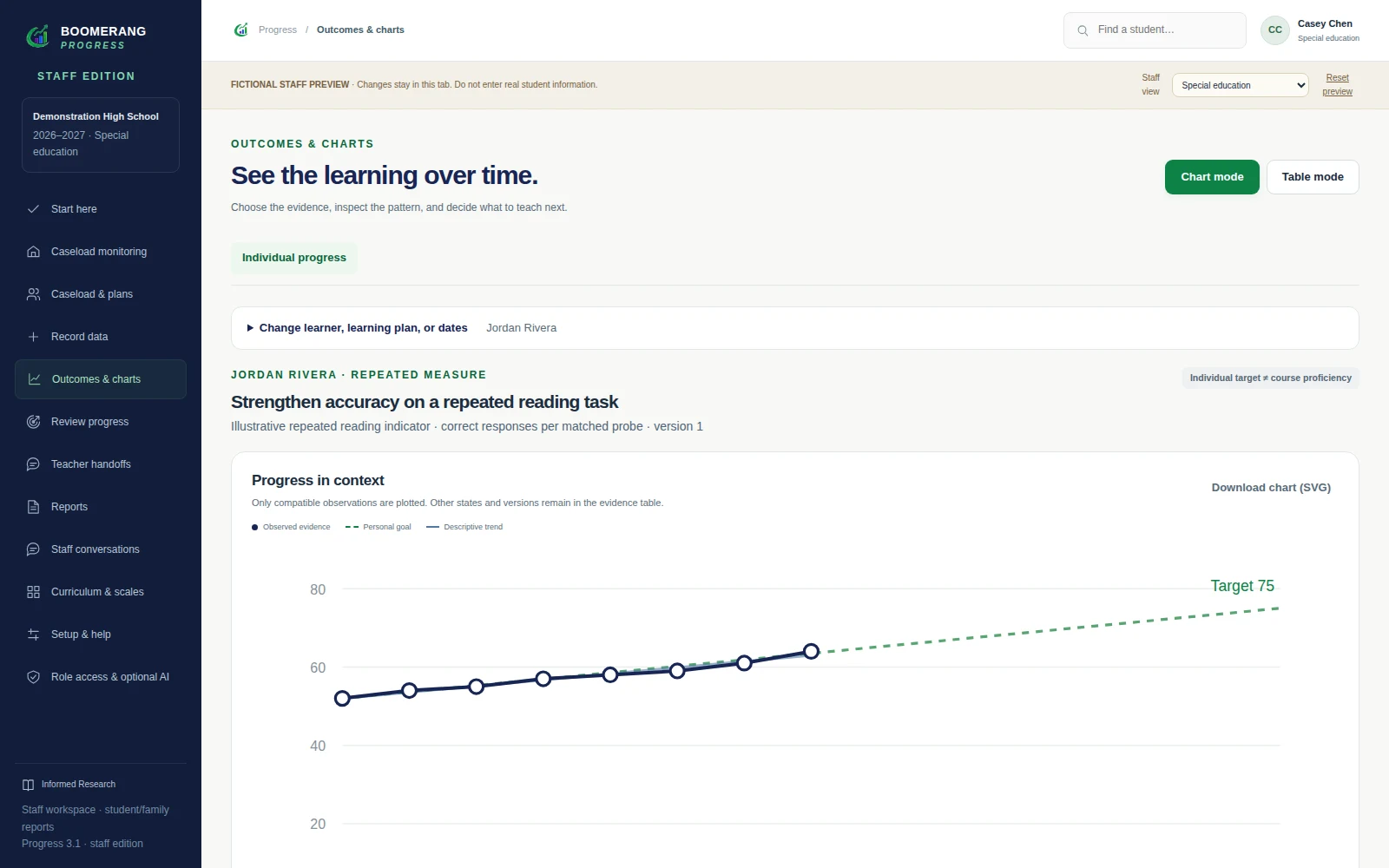
Special education staff follow verified caseloads. Designated MTSS coordinators can inspect class and individual progress across an explicitly authorized school scope. Viewing a record is separate from permission to change its scores.
Meeting-specific shares are time-limited. A title or role alone does not grant access to every student’s record; the school verifies the educational responsibility.

Follow assigned students’ individualized goals, observations, decisions, and supplemental progress contributions. Prepare information for the school’s IEP reporting process.
Start with schoolwide monitoring, then follow the pattern into a class or individual goal. Prepare a reviewed classroom return from an existing decision and inspect the delivery context and new evidence at the next review.
Use an appropriate, school-verified staff assignment or meeting share to bring the academic picture into a support conversation. Access is tied to the actual responsibility and authorized records.
IDEA requires an IEP to state how progress toward annual goals will be measured and when progress reports will be provided. Progress can support the evidence and reporting work around those goals.
Authorized staff retain control over interpretation, evaluation requests, and IEP decisions. Progress records supplemental information; adopted IEP changes remain part of the school’s formal process.
Read the IDEA and access foundations